
BLOG
Members Don’t Complain. They Just Leave, and You See It Two Quarters Later.

Key takeaways
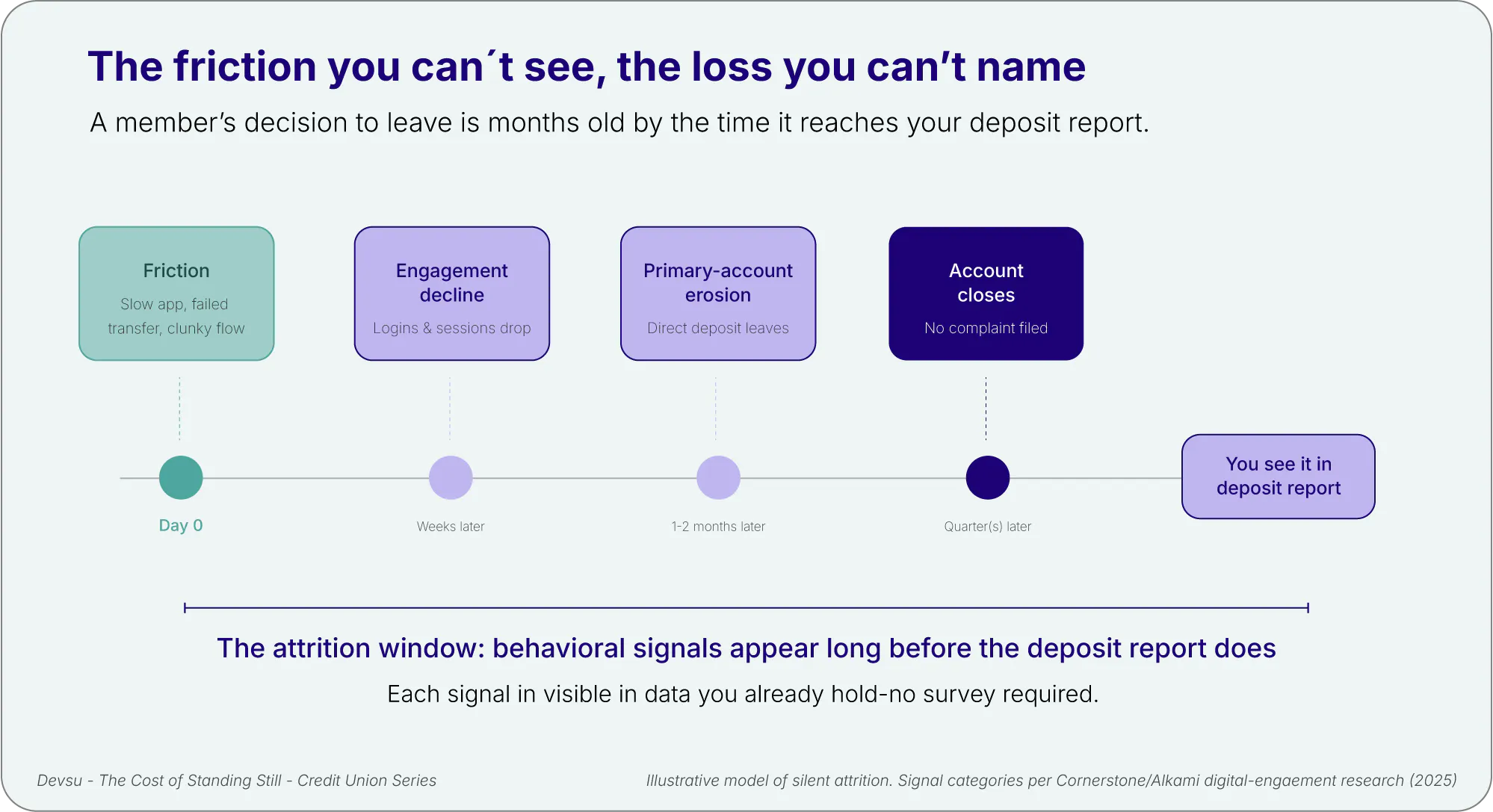
• Most members who leave never file a complaint. Attrition shows up in your deposit reports a quarter or two after the experience that triggered it.
• The leading indicator is digital engagement, not survey scores. A member who stops logging in, stops using mobile deposit, or routes their direct deposit elsewhere has usually already decided.
• Friction in everyday digital interactions, a slow app, a clunky transfer, a failed mobile deposit, is a balance-sheet issue, not a help-desk issue.
• You can quantify the runoff. A simple model ties session decline and primary-account loss to dollars of deposits at risk per year.
For most credit union operations leaders, the retention dashboard is built around things members say. Net Promoter Score. Complaint volume. Branch satisfaction surveys. Exit reasons captured at account closure.
These metrics are useful. They are also late. They tell you about members who have already decided to leave, or who cared enough to tell you why. The members who matter most to the deposit base are the ones who never say anything at all.
Why don’t members tell you before they leave?
Because leaving a credit union is rarely a single decision. A member opens a checking account at a fintech to try mobile budgeting. Their employer switches payroll providers and the new portal defaults to a different routing number. A bill-pay transfer fails once, so they start using a card from another institution. None of these is a complaint. Each one moves a little more of the relationship somewhere else.
By the time the primary-account relationship is gone, the member has no reason to call. They simply use the credit union less, then close it, or leave a few dollars in a dormant savings account. The operations team sees the result, a softening deposit trend, long after the experience that caused it.
What actually predicts deposit attrition?
Industry research over the past two years points to the same conclusion: digital engagement is now the most reliable early signal of whether a member relationship is strengthening or unwinding. Members who actively use digital channels hold more products and keep deposits longer; members whose digital engagement falls off are the ones most likely to leave next.
The mechanism is straightforward. The everyday relationship between a member and their financial institution now runs through a screen. The quality of that digital experience is the relationship for most members, most of the time. When the experience is slow, awkward, or unreliable, members do not file complaints. They quietly shift their primary activity to whichever app makes their financial life easier.
The three signals that move before deposits do
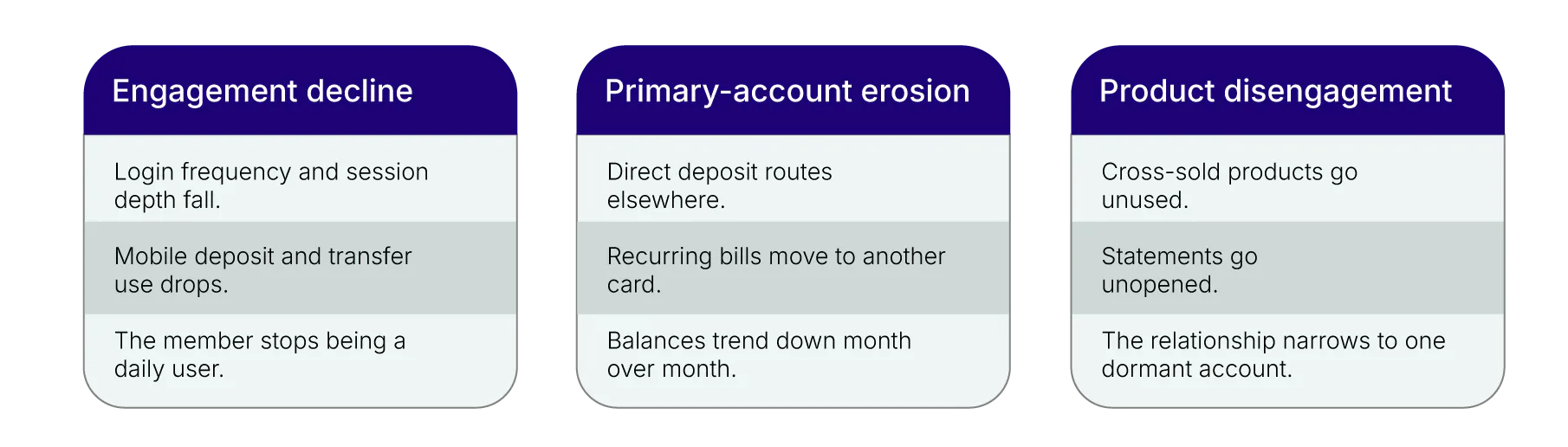
Each of these is visible in the data the credit union already holds. None requires a survey. And each one appears before the deposit report does, which is exactly why they are useful.
How much does digital friction actually cost?
The instinct is to treat a lagging digital channel as a technology line item, something the CIO owns and the operations team inherits. But the cost lands on the balance sheet, which makes it an operations and finance question. It can be estimated directly.
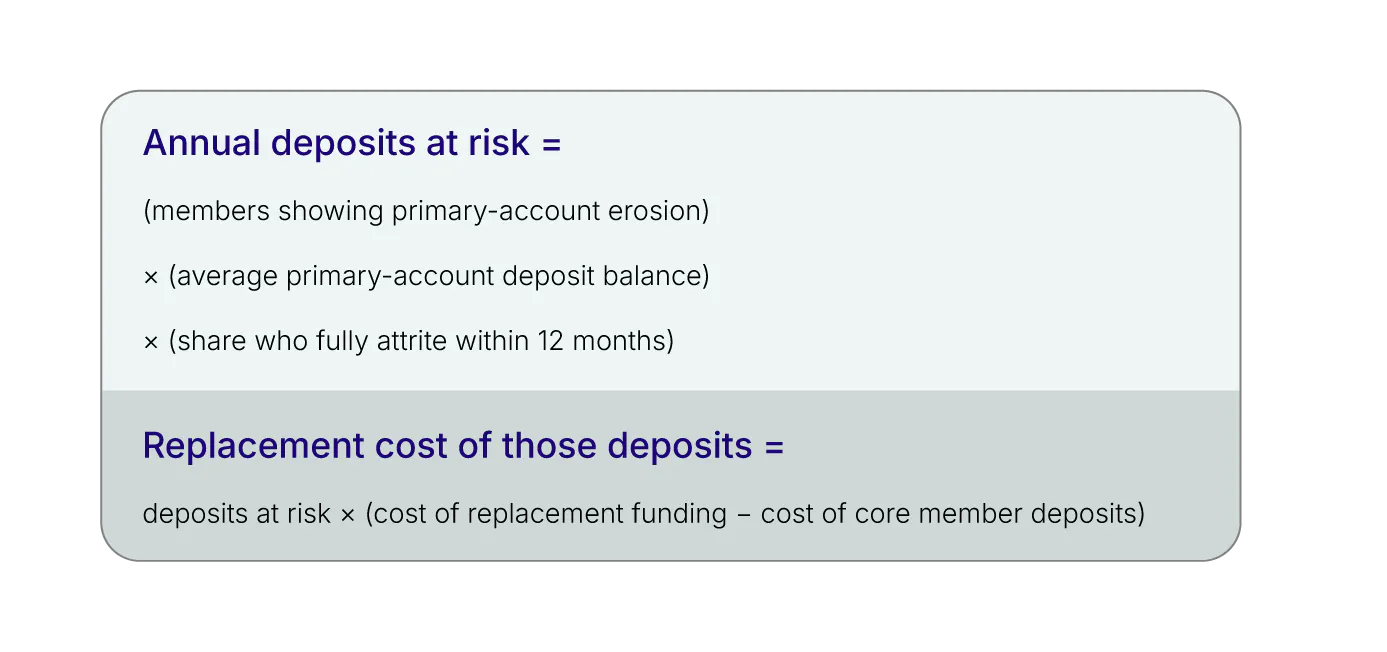
The numbers are often larger than expected because core member deposits are the cheapest, stickiest funding a credit union has. Replacing a runoff of low-cost primary-account deposits with brokered or promotional funding carries a real spread, and that spread, multiplied across even a modest attrition rate, is a material drag on margin.
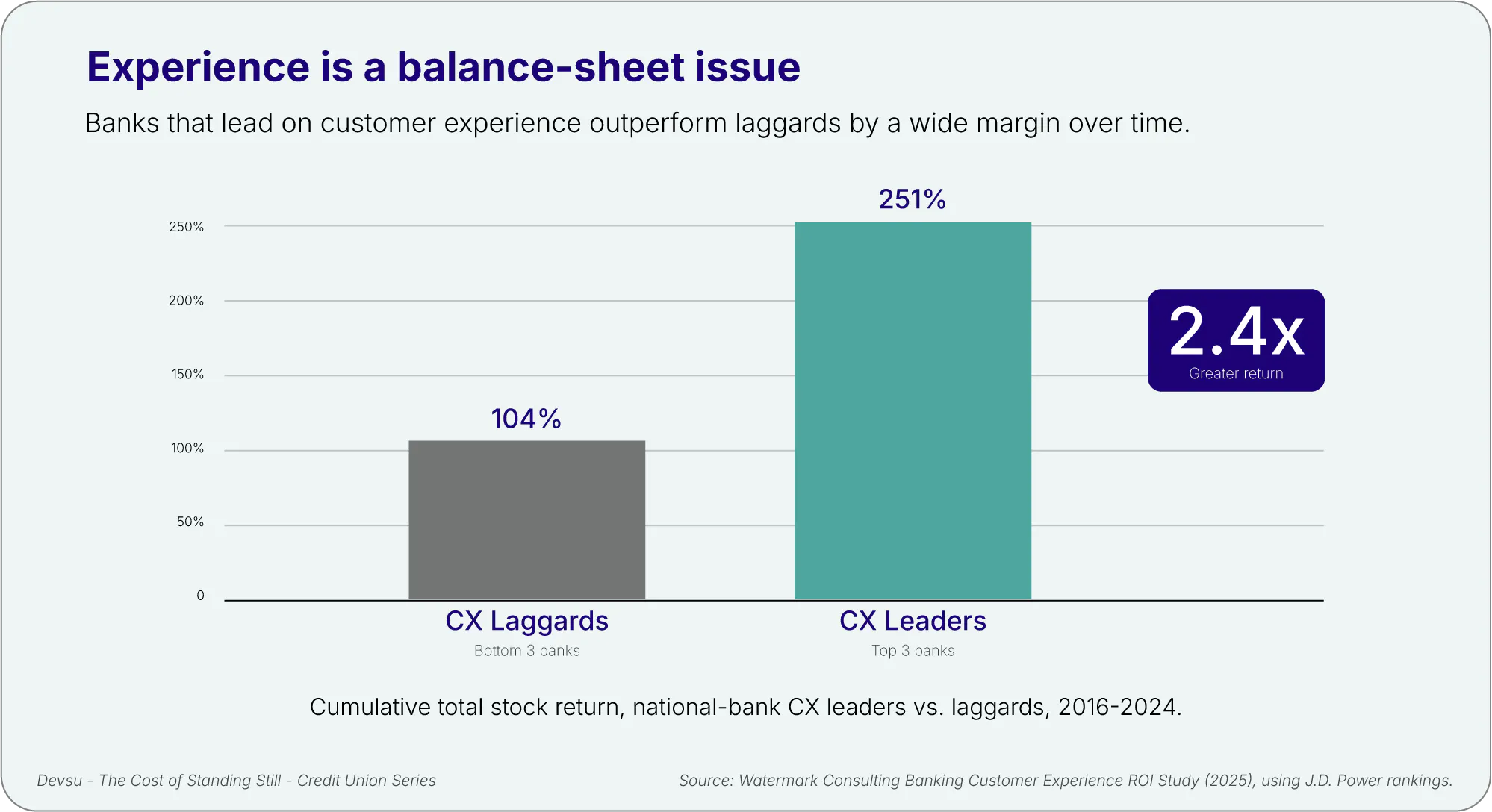
What can operations actually do about it?
The friction that drives silent attrition usually lives in the layer the member touches: the mobile app, the digital account-opening flow, the transfer and payment experiences, the integration points between the core and everything around it. That distinction matters, because it means the problem is addressable without a full core replacement.
The practical path is to start by measuring the behavioral signals above, identify where the everyday digital experience breaks down, and modernize those experiences around the existing core rather than waiting for a multi-year platform conversion. The risk of acting is a bounded, measurable modernization effort. The risk of waiting is that you will not see another two quarters of attrition until the deposits are already gone.
You may also like


Frequently asked questions
How is silent attrition different from normal churn?
Normal churn includes members who close accounts for reasons you can see and often cannot control, relocation, life events, rate shopping. Silent attrition is the runoff that happens without any signal in your complaint or survey data, driven by everyday experience rather than a stated grievance. It is more addressable precisely because its causes are operational.
Can we measure this without a new analytics platform?
In most cases, yes. Login frequency, transaction counts, direct-deposit presence, and balance trends are already captured in systems the credit union runs today. The work is in bringing those signals together into a view of relationship health, not in acquiring new data.
Does fixing this require replacing our core?
Usually not. The experiences that drive silent attrition tend to sit in the digital and integration layers around the core. Those can be modernized on their own timeline, which is the subject of a separate article in this series.