
BLOG
Capacity Quantification: Role-by-Role Models for Software Engineering Leaders

When engineering leaders evaluate capacity, the decision is rarely about generic headcount. The smarter path is to treat capacity as a modular, role-by-role decision, grounded in clear scenarios, measurable effort needs, and strategic timing.
Why? Because adding a permanent full-stack engineer will not fix a sudden DevOps infrastructure migration bottleneck.
This resource breaks down common software engineering roles and highlights the structural scenarios in which Elastic Capacity (staff augmentation or contract help) delivers maximum value. Use this as a diagnostic checklist to assess where your delivery roadmap is most exposed to capacity risk.
Why Role-by-Role Capacity Planning Matters
Rather than waiting until velocity slips, role-specific capacity planning helps you shift from a reactive mindset to proactive management:
- Precision Matching: Precisely match specialized skills (e.g., Cypress automation, cloud FinOps) to temporary or specialized tasks.
- Cost Efficiency: Avoid over-hiring for cyclical or one-off specialist workloads, preventing long-term fixed cost burdens.
- Predictability Uplift: Secure predictable delivery by ensuring every high-risk project has the necessary resources locked in from Day 1.
This model is increasingly standard among high-growth engineering teams relying on both internal and augmented resources to mitigate capacity risk.
Role-by-Role Scenarios: When Elastic Capacity Wins
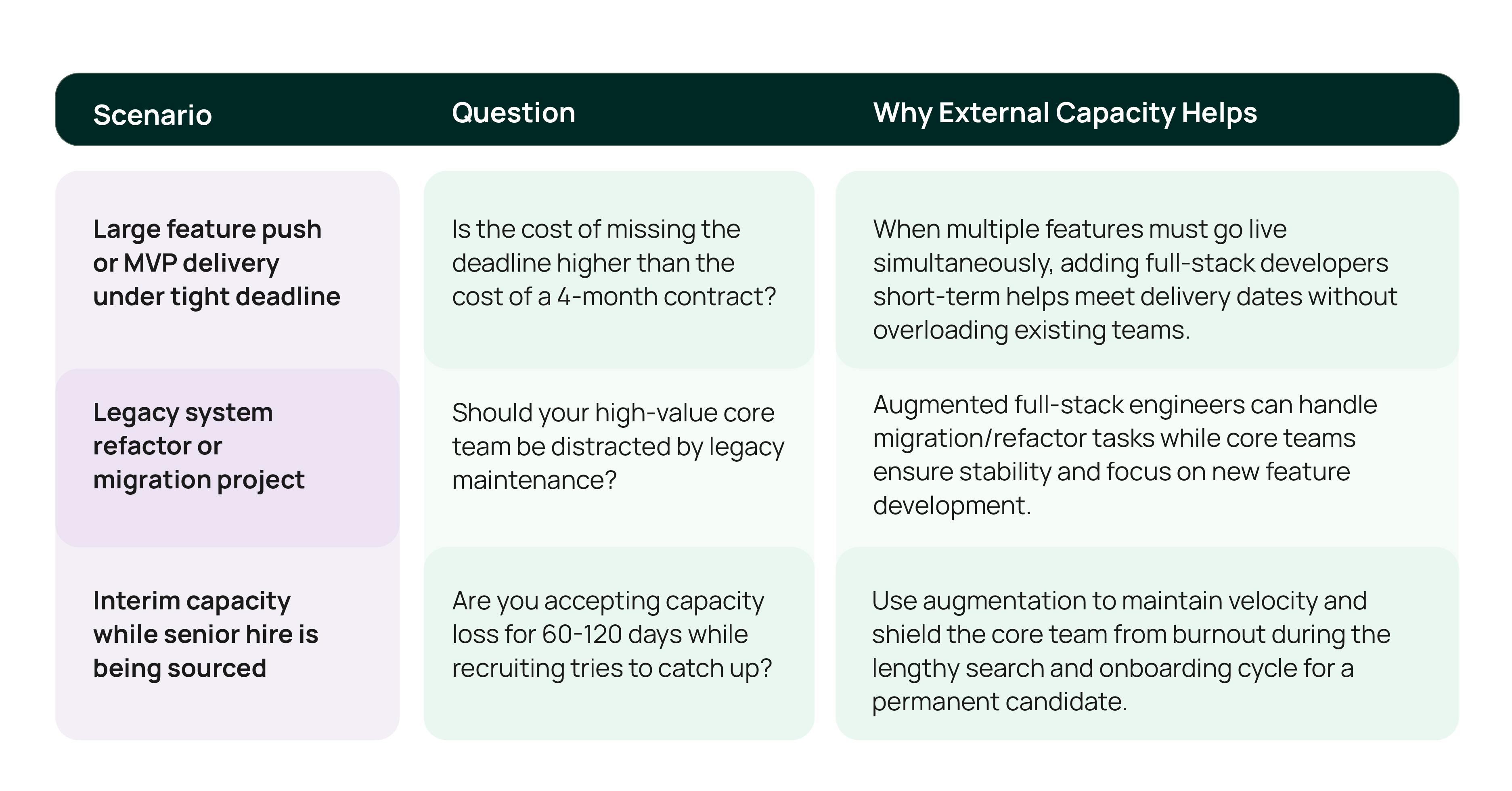
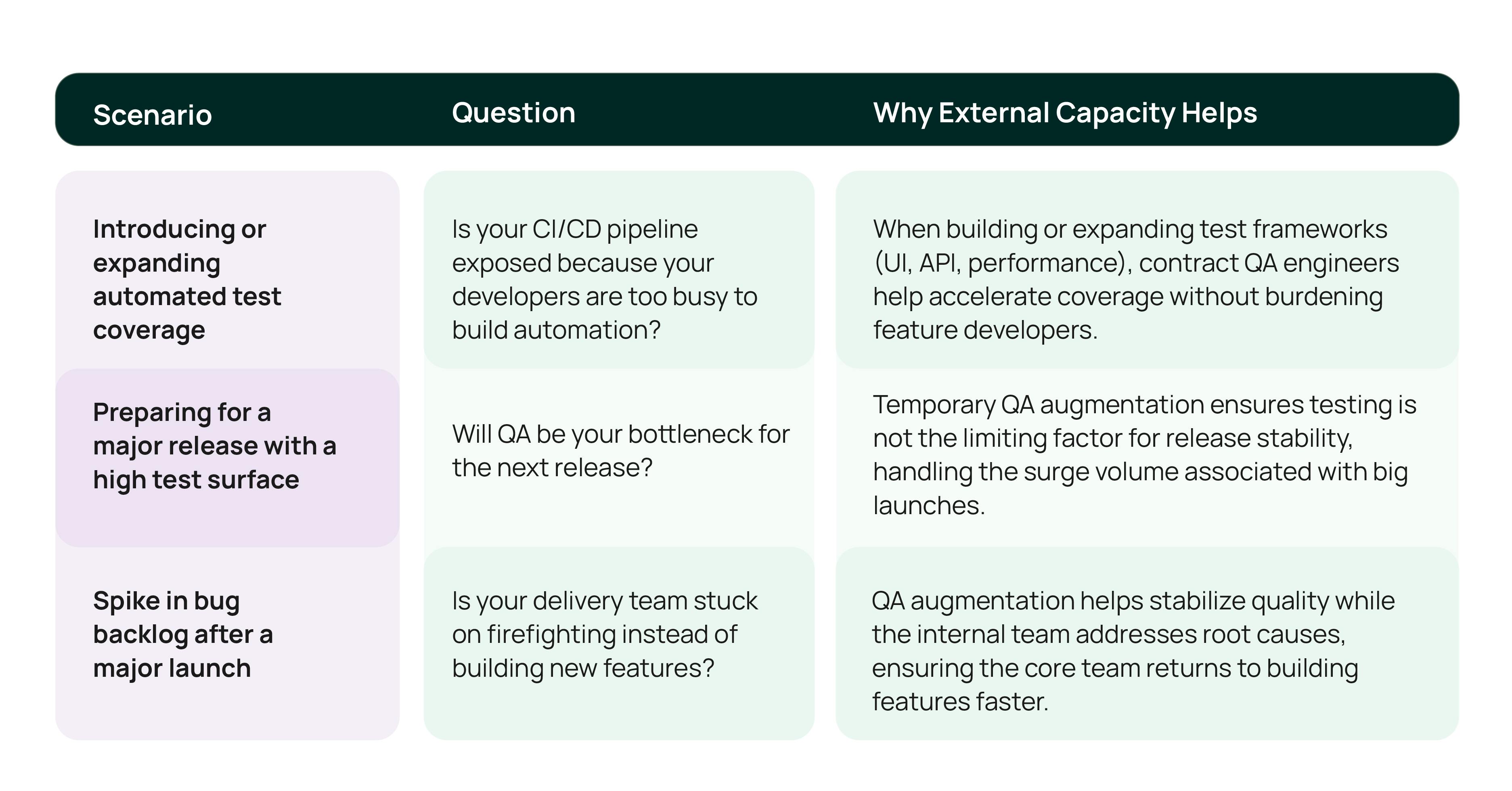
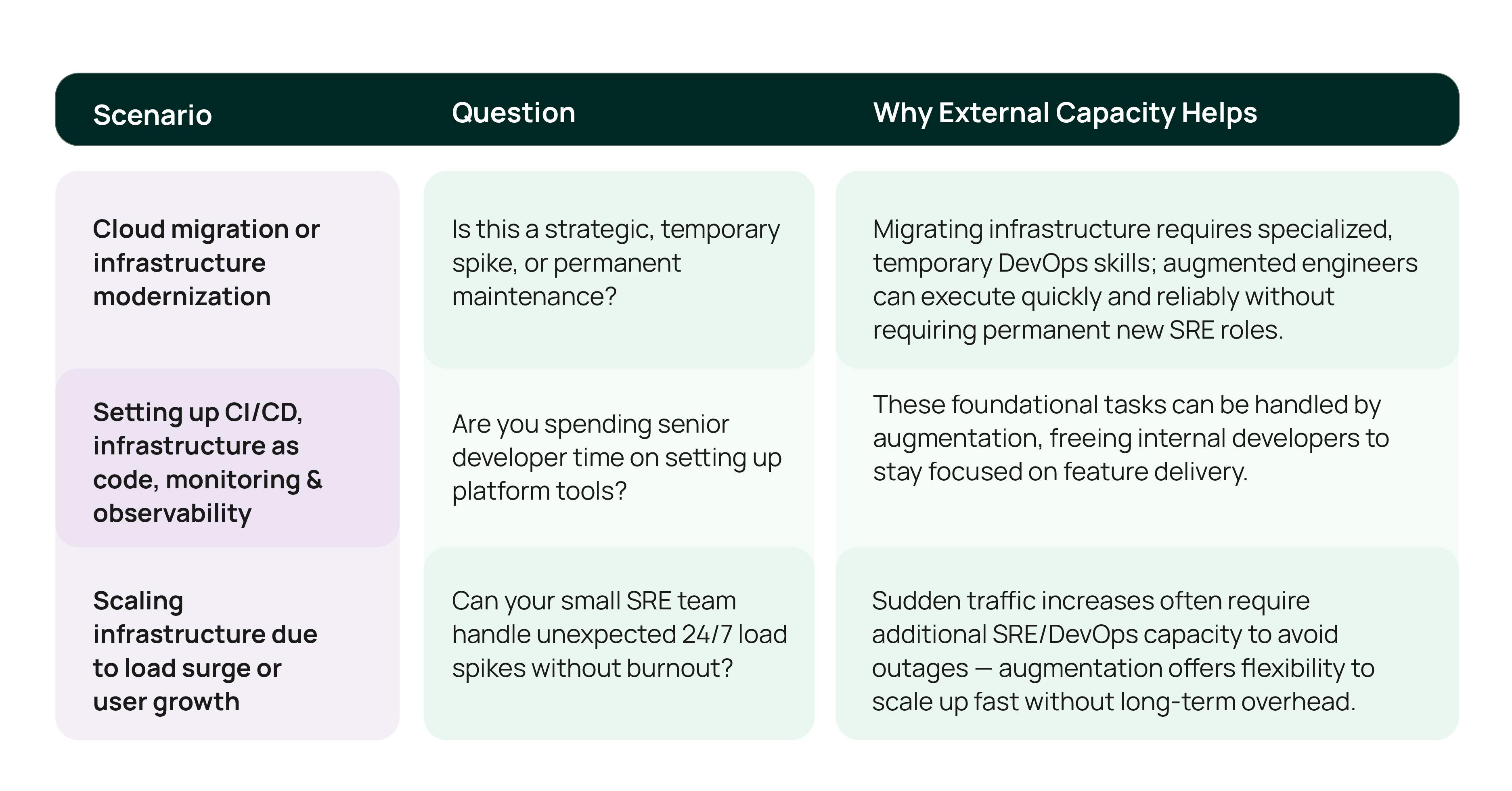
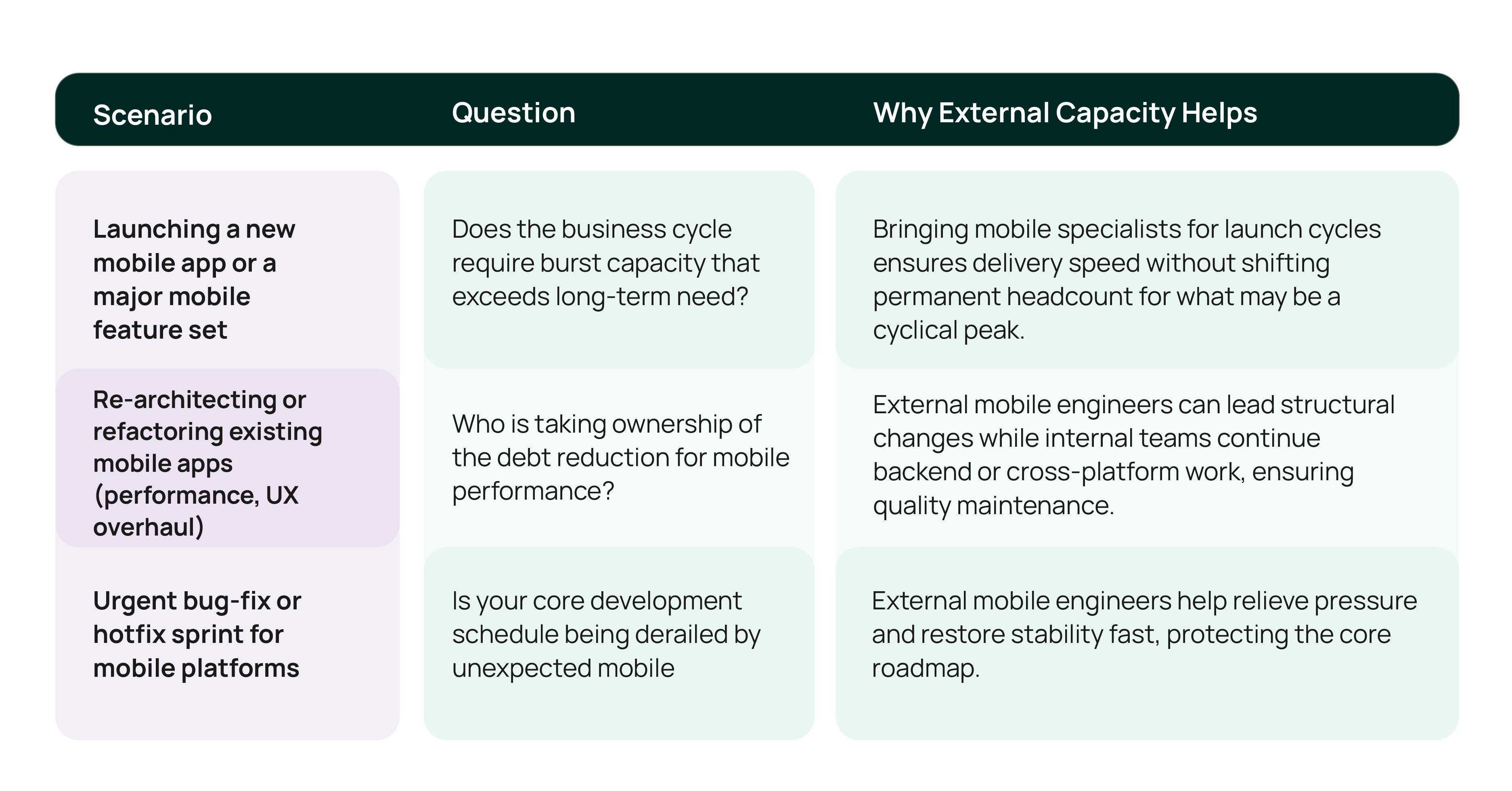
Below is a breakdown of several core roles, paired with concrete scenarios where bringing in external capacity makes sense before the capacity gap turns into roadmap slippage.
A. Full-Stack Engineers
B. QA / Test Automation Engineers
C. DevOps / Cloud / Infrastructure Engineers
D. Mobile Engineers (iOS / Android / Cross-Platform)
3. The Capacity Decision Framework
Engineering leaders must view capacity through the lens of risk and duration. This framework clarifies the decision point:
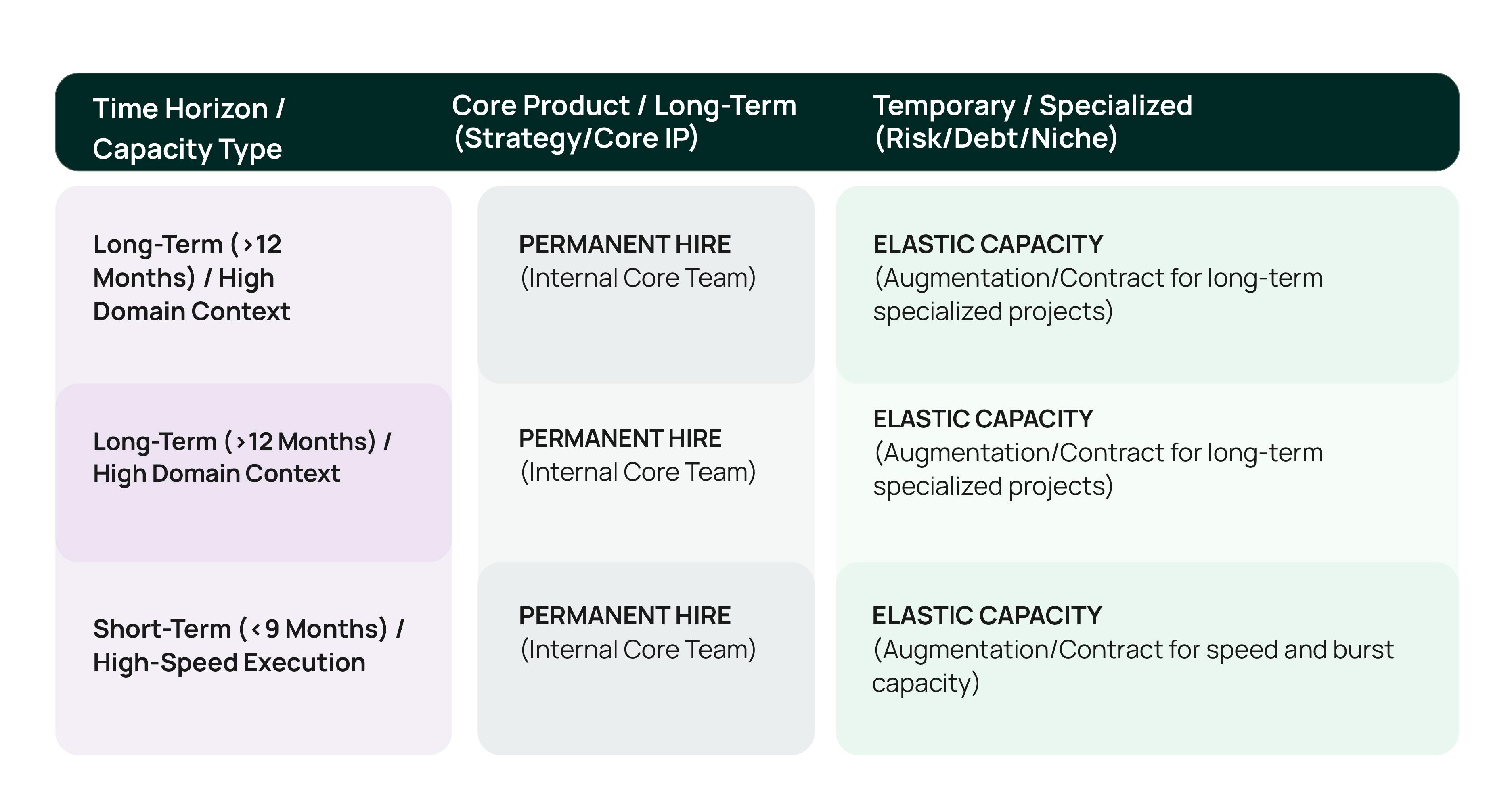
Start: Is this capacity needed for >12 months?
- YES: Is the skill core IP?
- YES: Permanent Hire (Internal Core Team).
- NO: Long-Term Augmentation (Strategic partnership).
- NO: Is the skill specialized/niche (DevOps, AI)?
- YES: Elastic Capacity (Augmentation for speed).
- NO: Augmentation/Internal Reprioritization.
Final Thoughts: Implementing Execution Resilience
For engineering managers and directors, effective capacity planning involves right-sizing skills, timing, and flexibility, role by role.
Using a role-by-role quantification model helps you make data-driven decisions: when to hire permanently, when to augment smartly, and when to re-prioritize internal workload.
We invite you to read "The Ultimate Guide to Staff Augmentation: Dipping into External Talent Pools to Expand Your Team." It explores selection models, integration approaches, and best practices that help teams get the most value out of augmented engineering capacity.


